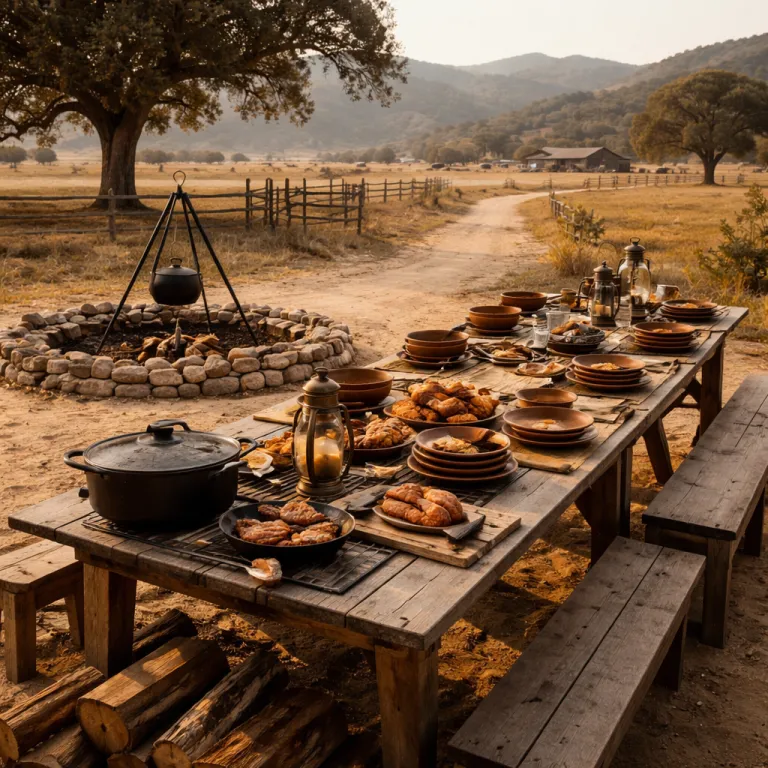
From cowboy supper to quiet luxury at the long table
The guest ranch dining experience has outgrown the cliché of beans by the fire. At serious properties, ranch cuisine now anchors the entire stay, shaping how guests move through each day and how strangers become riding partners by breakfast. Yet the soul of ranch food still lives in the same dining room rituals that fed working cowhands long before tasting menus or chef’s tables existed.
Ranches have always been built around three fixed mealtimes, and Dude Ranchers’ Association (DRA) member properties historically required three daily meals as part of the guest package. That tradition still frames the rhythm of breakfast, lunch, and dinner today. Recent industry surveys from the early 2020s suggest that three meals per day remain the norm at most U.S. guest ranches, and roughly four out of five properties still offer some form of family-style dining to keep that sense of shared table hospitality alive. This structure means your meals are not an add-on but the backbone of the stay, from the first breakfast to the final cowboy cookout under a big sky of stars.
What keeps the classic ranch supper relevant is not nostalgia, but proximity. When a ranch raises its own beef and partners with nearby growers, the supply chain between pasture, grill, and plate can be measured in minutes, not kilometres, which no city restaurant can consistently match. The result is a dining culture where the food is not styled to impress but cooked to honour the land that produced it, whether you are eating fresh fruit at breakfast or slow-braised short rib at dinner in the main dining room.
On a working dude ranch in Montana or Wyoming, the chef is often walking fence lines in the morning and tasting sauces by late afternoon. That same chef may be the one pouring local beers at the bar before dinner, explaining which ranch dishes pair best with a malty amber or a crisp lager. This intimacy between chef, land, and guest makes the ranch table feel less like restaurant theatre and more like being invited into a private home where the culinary team actually lives with the consequences of every menu choice.
Communal tables remain the quiet superpower of ranch dining for solo travellers. You might join a long table as a single guest and, by the end of the day, find yourself planning the next morning’s horseback riding route with people you met over hors d’oeuvres and a shared plate of grilled vegetables. That social alchemy is not accidental; it is engineered by the way ranches seat guests, pace courses, and weave live music or campfire stories into the evening meal.
For travellers used to private dining rooms and hushed service, the first night at a dude ranch can feel disarming. You are invited to join other guests, pass platters, and talk to the executive chef as easily as to the wrangler who led your mountain ride. Yet this is precisely where the luxury lies, because the ranch dining room gives you access to people and stories, not just plates and pairings, and that is something no urban fine-dining room or city tasting menu can replicate.
Proximity on the plate: how ranches redefine local and seasonal
Luxury travellers hear the words local and seasonal so often that they have become background noise. At a serious guest ranch, those words regain their meaning, because the culinary team is often cooking what the ranch itself has raised or what neighbouring farms harvested that week. The food and beverage programme becomes a living map of the valley rather than a marketing slogan on the menu.
Consider The Ranch at Rock Creek in Western Montana, where internal sustainability reporting from the past several seasons indicates that the vast majority of meats, summer produce, grains, and dairy are sourced from within the region, turning each dinner into a direct expression of the surrounding landscape. That kind of sourcing is not a trend but a continuation of ranch self-sufficiency that predated the farm-to-table movement by decades, when cooks had to rely on what could be grown, hunted, or preserved on site. When you sit down in the dining room there, the steak on your plate and the fresh fruit in your breakfast bowl are part of a tight loop between pasture, kitchen, and guest.
Other premium guest ranches with gourmet dining lean into this same proximity advantage in different ways. Some build their menus around a wood-fired grill that burns local timber and sears ranch-raised beef, while others focus on refined hors d’oeuvres and tasting flights of local beers that showcase regional grains and hops. What unites them is a refusal to treat ranch meals as rustic theatre; instead, the chef and culinary team use the land as their pantry and the seasons as their calendar.
Local sourcing at a ranch also looks different from the restaurant version of the claim. When a chef at a dude ranch says the lamb is local, it may have grazed the same mountain pastures you rode across during the day, and the herbs in your breakfast frittata might come from a kitchen garden you can actually walk through. That immediacy deepens the sense of place at the table, because guests can trace their food back to specific fields, barns, and people rather than a vague notion of regional supply chains.
Summer amplifies this connection, as ranches extend the dining room outdoors and stage cowboy cookouts beside rivers or under cottonwoods. Here, the grill becomes both kitchen and theatre, with the culinary team searing steaks, charring corn, and warming cast-iron cobblers while guests sip something to wet their whistle and listen to live music. These outdoor suppers are not staged photo opportunities; they are the modern expression of a working tradition where the day’s labour ended around a fire and a shared meal.
For travellers choosing between a city tasting menu and a ranch stay, the question is simple. Do you want a chef who orders local and seasonal ingredients from a distributor, or one who can point to the exact pasture, orchard, or river that shaped tonight’s menu while you join other guests at the long table? On a well-run property, the answer is plated three times a day, every day of your stay.
From camp cook to executive chef: the new guardians of ranch cuisine
Ranch kitchens have long been romanticised as the domain of the gruff camp cook, yet that image undersells the professionalism now required to run a modern guest ranch food programme. Today’s executive chef at a luxury dude ranch manages a full culinary team, complex dietary restrictions, and a service schedule that can span from sunrise coffee to midnight cowboy cookouts. The stakes are high, because every plate must satisfy guests who could just as easily book a Michelin-starred restaurant in a city.
What distinguishes these chefs is not white-tablecloth formality, but range. In a single day, the same chef might plate delicate hors d’oeuvres for a wine tasting, oversee a hearty breakfast buffet for families, and then orchestrate a multi-course dinner in the main dining room that respects both ranch traditions and contemporary techniques. That breadth of dining experiences demands serious training, yet it also requires humility, because the food must feel grounded in place rather than imported from a distant culinary scene.
Dietary restrictions are the crucible where this professionalism shows. Most ranches now ask guests to share allergies and preferences in advance, and the best teams treat this not as a burden but as a design brief for the overall dining experience. A thoughtful kitchen can serve gluten-free biscuits at breakfast, dairy-free desserts at dinner, and plant-forward options at the grill without diluting the identity of ranch cuisine or sidelining guests with specific needs.
For solo travellers, this attention to detail builds trust quickly. When the executive chef remembers your preference for strong coffee and extra fresh fruit on the second morning, or quietly adjusts the menu after a conversation about dietary restrictions, the ranch stay shifts from generic hospitality to something almost bespoke. That level of care is why curated luxury ranch holiday packages increasingly highlight food as a central pillar rather than a supporting amenity.
The supply chain advantage of ranches that raise their own beef also changes how chefs think about waste and respect. When the animal has been part of the ranch ecosystem rather than an anonymous commodity, the culinary team tends to use more cuts, more techniques, and more time, turning what might be trim in a city kitchen into slow-cooked treasures at the cowboy cookouts. Guests feel that difference in the depth of flavour at dinner and in the quiet pride with which servers describe each dish in the dining room.
There is a strong case for treating ranch chefs as full hospitality professionals rather than background figures. They are orchestrating the daily food rituals that frame your horseback riding schedule, your social life at the ranch, and even your sense of the surrounding mountain landscape. When you choose a property, pay as much attention to the chef’s biography, the date of their most recent menu overhaul, and the philosophy of the culinary team as you do to the spa menu or the room category, because on a ranch, the kitchen is where the story of the place is told three times a day.
The table as trailhead: why meals matter most to solo travellers
For the solo explorer, the guest ranch table is not just about what is on the plate. It is the social infrastructure that turns a remote ranch into a temporary village, where the dining room becomes the town square and each meal a chance to reset the day’s narrative. If you arrive alone, the first breakfast can feel like a test; by the second dinner, it often feels like a reunion.
Ranches understand this dynamic and design their dining experiences accordingly. Many still favour family-style service, where guests join communal tables, pass platters, and share stories about the day’s horseback riding or fly fishing, which accelerates the process of turning strangers into companions. When you sit down, you are not just assigned a room number on a check; you are folded into a loose, shifting community that reforms at every meal.
The first day at a dude ranch can be disorienting, especially if you are used to anonymous city hotels. Guides, wranglers, and fellow guests already seem to know one another, and the schedule of rides, hikes, and cowboy cookouts can feel dense until you understand the rhythm, which is why a clear first-day rundown is invaluable. Once you realise that every activity funnels back to the dining room, the ranch experience starts to feel less like a programme and more like a series of conversations that continue over breakfast, lunch, and dinner.
Evening meals are where the social energy of ranch dining reaches its peak. Guests arrive with dust on their boots and stories from the trail, the bar staff offer something to wet your whistle, and the culinary team sends out hors d’oeuvres that encourage mingling before everyone sits. Live music might start softly in the corner, giving solo guests an easy way to join a conversation about the set list, the mountain views, or the day’s ride without the forced intimacy of small talk at a bar.
Mornings, by contrast, are quieter and more reflective. You might sit with a plate of eggs, fresh fruit, and strong coffee, watching the light move across the big sky while the chef checks in about your plans for the day and any tweaks to your dietary needs. Those small interactions, repeated across several days, create a sense of being known that many luxury properties promise but few deliver, and they are all mediated through the simple act of sharing food in the same room.
By the time you leave, it is often the meals you remember most clearly. Not just the flavour of the ranch cooking or the precision of the grill work, but the way the shared table stitched together your rides, your conversations, and your quiet moments into a coherent story. For solo travellers especially, the table is not the end of the trail; it is the place where every trail begins again the next morning, with a fresh cup, a new menu, and a room full of guests who no longer feel like strangers.
Key figures shaping the modern guest ranch table
- Most guest ranches still serve an average of three meals per day as part of their standard offering, which keeps food and beverage service central to the overall stay rather than an optional extra (general guest ranch data, United States; industry norms reported consistently since the mid-2010s).
- Industry surveys conducted across U.S. properties in the early 2020s indicate that around 80–85% of ranches offer some form of family-style dining, a format that directly supports communal tables and shared platters, helping solo guests integrate quickly into the ranch community (industry surveys, United States, 2020–2023).
- At leading properties such as The Ranch at Rock Creek in Western Montana, internal sustainability reports from recent years describe a very high proportion of meats, summer produce, grains, and dairy being sourced from within the region, illustrating how ranches can outperform many urban restaurants on genuine local and seasonal sourcing (property sustainability reporting, Western Montana, updated annually).
- Dude Ranchers’ Association guidelines and member standards continue to emphasise three structured mealtimes and inclusive dining formats, reinforcing the role of the shared table as a core part of the guest ranch experience (DRA guidance, North America, current as of the early 2020s).
References
- The Ranch at Rock Creek – Sustainability and sourcing practices, Western Montana (internal property reporting and publicly available sustainability summaries, updated on a seasonal and annual basis).
- Dude Ranchers’ Association – Historical standards for guest ranch meal service in North America (association guidelines and member property norms, with current recommendations published in the early 2020s).
- United States guest ranch industry surveys – Data on family-style dining formats, meal patterns, and typical food service structures (aggregated survey findings from 2020–2023 across a broad sample of guest ranches).